Simple Line📌 Understanding the Basic Concept
The trend reverses only when the price moves up or down by a fixed filter size.
It ignores normal volatility and noise, recognizing a trend change only when price moves beyond a specified threshold.
Trend direction is visually intuitive through line colors (green: uptrend, red: downtrend).
⚙️ Explanation of Settings
Auto Brick Size: Automatically determines the brick/filter size.
Fixed Brick Size: Manually set the size (e.g., 15, 30, 50, 100, etc.).
Volatility Length: The lookback period used for calculations (default: 14).
📈 Example of Identifying Buy Timing
When the line changes from gray or red to green, it signals the start of an uptrend.
This indicates that the price has moved upward by more than the required threshold.
📉 Example of Identifying Sell Timing
When the line changes from green to red, it suggests a possible downtrend reversal.
At this point, consider closing long positions or evaluating short entries.
🧪 Recommended Use Cases
Use as a trend filter to enhance the accuracy of existing strategies.
Can be used alone as a clean directional indicator without complex oscillators.
Works synergistically with trend-following strategies, breakout strategies, and more.
🔒 Notes & Cautions
More suitable for medium- to long-term trend trading than for fast scalping.
If the brick size is too small, the indicator may react to noise.
Sensitivity varies greatly depending on the selected brick size, so backtesting is essential to determine optimal values.
❗ The Trend Simple Line focuses solely on direction—remove the noise and focus purely on the trend.
초대 전용 스크립트
이 스크립트에 대한 접근이 제한되어 있습니다. 사용자는 즐겨찾기에 추가할 수 있지만 사용하려면 사용자의 권한이 필요합니다. 연락처 정보를 포함하여 액세스 요청에 대한 명확한 지침을 제공해 주세요.
이 비공개 초대 전용 스크립트는 스크립트 모더레이터의 검토를 거치지 않았으며, 하우스 룰 준수 여부는 확인되지 않았습니다. 트레이딩뷰는 스크립트의 작동 방식을 충분히 이해하고 작성자를 완전히 신뢰하지 않는 이상, 해당 스크립트에 비용을 지불하거나 사용하는 것을 권장하지 않습니다. 커뮤니티 스크립트에서 무료 오픈소스 대안을 찾아보실 수도 있습니다.
작성자 지시 사항
.
c9indicator
면책사항
해당 정보와 게시물은 금융, 투자, 트레이딩 또는 기타 유형의 조언이나 권장 사항으로 간주되지 않으며, 트레이딩뷰에서 제공하거나 보증하는 것이 아닙니
Bandas y canales

Filte Ichimoku1. Indicator Name
Filte Ichimoku
2. One-line Introduction
A smoothed and visually enhanced version of the Ichimoku Cloud that highlights trend direction and strength using adaptive color transparency.
3. General Overview
Filte Ichimoku is a modernized take on the classic Ichimoku Kinko Hyo indicator, designed for traders who value clarity and minimalism while retaining core Ichimoku functionality.
It calculates traditional components like Tenkan-sen, Kijun-sen, and the Senkou Span A/B, but focuses primarily on visualizing the Kumo (cloud) with enhanced styling.
Instead of raw plots, Filte Ichimoku applies triple-step smoothing to both Senkou spans, creating a soft, wave-like appearance that reflects trend fluidity.
The color of the cloud dynamically adapts based on whether Span A is above or below Span B (bullish/bearish), and its opacity changes according to the intensity of the trend, which is calculated relative to ATR-based volatility.
By forward-shifting the plots and visually blending the cloud, the indicator helps traders quickly identify dominant trends, potential reversals, and consolidation zones.
Its clean design makes it highly compatible with both traditional Ichimoku strategies and modern price action systems.
4. Key Advantages
🌥 Adaptive Ichimoku Cloud
Cloud color and transparency dynamically change based on real trend strength and direction.
📊 Smoother, Cleaner Display
Triple-smoothing on Senkou A and B creates a less noisy, more readable visual output.
📈 Forward Shift Preserved
Maintains the traditional Ichimoku forward-shift logic, helping project future price zones.
🎨 Customizable Trend Colors
Define your own bullish and bearish cloud colors for easy visual alignment with your strategy.
🚫 Noise Reduction via ATR Normalization
Trend intensity is calculated relative to ATR, reducing false positives in low-volatility zones.
🔒 Lightweight & Secure Design
Optimized script avoids exposure of sensitive logic while remaining fast and reliable in live charts.
📘 Indicator User Guide
📌 Basic Concept
Filte Ichimoku emphasizes cloud dynamics (Kumo) to interpret market structure.
Trend direction is derived from the relationship between Senkou Span A and B, while trend strength is measured by their distance relative to ATR.
The smoother curves make it easier to read while preserving all Ichimoku logic.
⚙️ Settings Explained
Tenkan Sen Length: Fast-moving average calculation period (default: 18)
Kijun Sen Length: Medium trend baseline (default: 52)
Senkou Span Length: Long-term cloud boundary (default: 104)
Bull/Bear Color: Set custom colors for bullish or bearish cloud states
📈 Bullish Timing Example
Senkou Span A > Span B, and the cloud appears green with high opacity
Indicates strong uptrend support, especially when price is above both Tenkan and Kijun
📉 Bearish Timing Example
Span B > Span A, cloud turns red and darkens
Suggests bearish dominance; avoid long entries or prepare for short-side setups
🧪 Recommended Use Cases
Use as a trend background layer for existing Ichimoku or price action systems
Combine with breakouts, support/resistance, and momentum indicators
Great for trend filtering in mid- to long-term strategies
🔒 Precautions
Designed for clarity and filtering—not a standalone entry system
In sideways markets, cloud may compress and color changes may become less meaningful
Adjust smoothing lengths cautiously to avoid lagging during volatile swings
Best results come from combining with price structure analysis

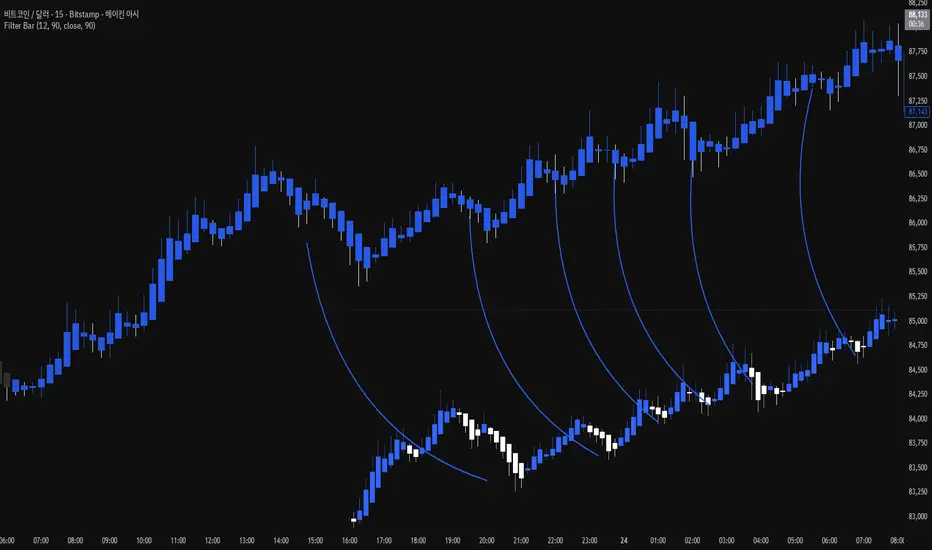
Filter Bar1. Indicator Name
Filter Bar
2. One-line Introduction
A trend-aware bar coloring system that visualizes market direction and strength through adaptive transparency based on regression scoring.
3. General Overview
Filter Bar+ is a minimalist but powerful trend visualization tool that colors chart bars according to market direction and momentum strength.
It analyzes the linear regression trend alignment over a specified lookback period and uses a pairwise comparison algorithm to determine whether the market is in a bullish, bearish, or neutral state.
The result is a "trend score" that gets normalized to reflect trend intensity (0~1).
Bar colors are then dynamically updated using the specified bullish or bearish base colors, where higher intensity results in more opaque (darker) bars, and weaker trends lead to lighter, faded tones.
If no strong trend is detected, bars are shown in gray, signaling indecision or neutrality.
The strength of this indicator lies in its simplicity—it doesn’t draw lines, waves, or shapes, but overlays insight directly onto the chart through smart color cues.
It’s particularly effective as a background filter for price action traders, scalpers, and anyone who prefers clean charts but still wants embedded directional context.
4. Key Advantages
🎨 Adaptive Bar Coloring
Bar color opacity increases with trend strength, offering instant visual confirmation without clutter.
📊 Quantified Trend Direction
Uses a regression-based scoring system to reliably detect uptrends, downtrends, or sideways markets.
⚖️ Customizable Sensitivity
Parameters like lookback period and tolerance percentage give users full control over signal responsiveness.
🧼 Clean Chart Presentation
No lines, shapes, or overlays—just color-coded bars that blend into your existing chart setup.
🚀 Lightweight & Fast
Minimal computational load ensures it works smoothly even on lower-end devices or multiple chart setups.
🔒 Secure Internal Logic
Algorithm is neatly encapsulated and optimized, with no critical logic exposed.
📘 Indicator User Guide
📌 Basic Concept
Filter Bar+ evaluates trend direction and strength using a pairwise comparison of linear regression values.
The result determines whether the market is bullish, bearish, or neutral, and adjusts bar colors accordingly.
It visually amplifies the current market state without drawing any indicators on the chart.
⚙️ Settings Explained
Lookback Period: Number of bars used to compare regression values
Range Tolerance (%): Minimum score required to label a trend as bullish or bearish
Regression Source: Data input used for regression (default: close)
Linear Regression Length: Period for generating the base regression line
Bull/Bear Base Colors: Choose colors to represent bullish or bearish bars
📈 Buy Timing Example
Bars are green (or user-set bullish color) and becoming more vivid
Indicates a strengthening bullish trend; helpful when used alongside breakout confirmation or support zones
📉 Sell Timing Example
Bars turn red (or your custom bearish color) with increasing opacity
Signals growing bearish pressure; acts as confirmation during short setups or breakdowns
🧪 Recommended Use Cases
Combine with volume, RSI, or price action setups for direction filtering
Ideal for clean chart strategies where visual simplicity is preferred
Use as a confirmation layer to reduce noise in sideways markets
🔒 Precautions
This is a visual filter, not a signal generator—use alongside other strategies for entries/exits
In choppy markets, bars may flicker between colors—adjust sensitivity as needed
Works best when you already have a directional thesis and want to validate it visually
Always test settings for your asset/timeframe before applying in live trades
Filter Ribbon1. Indicator Name
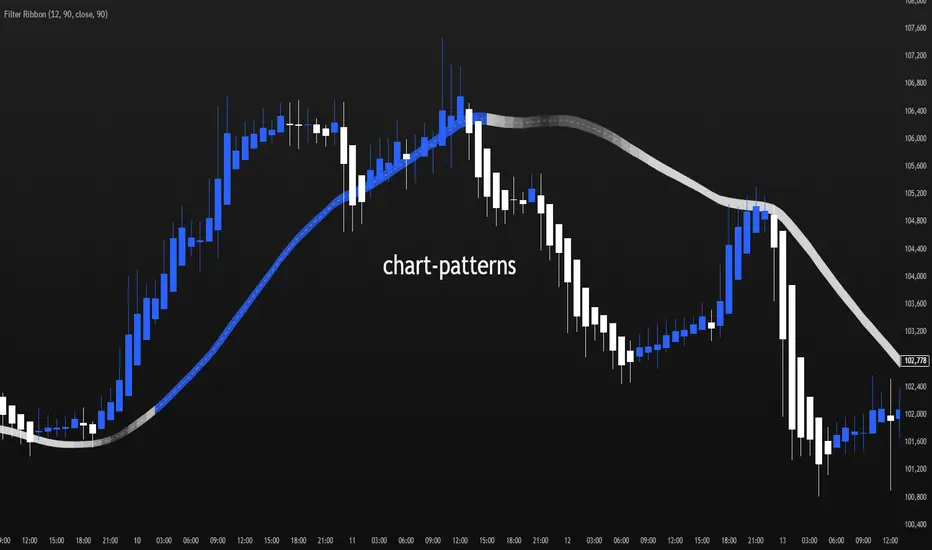
Filter Ribbon
2. One-line Introduction
A trend visualization ribbon that uses linear regression and directional scoring to highlight bullish and bearish strength with intuitive color gradients.
3. General Overview
Filter Ribbon is a minimalistic yet powerful trend visualization tool that leverages linear regression slope ordering to determine directional momentum. It analyzes the ordering of regression values over a defined lookback period and quantifies how consistently the price has been trending upward or downward.
Using a pairwise comparison system, it calculates a trend "score" and compares this to a configurable threshold to determine if a bullish, bearish, or neutral condition exists.
The result is a color-coded ribbon that sits over the chart, changing hue and opacity based on both the direction and strength of the trend. The stronger the directional alignment, the more opaque the ribbon becomes, offering traders a fast, intuitive way to assess market sentiment at a glance.
It also includes an optional linear regression line to further help visualize the central trend.
This indicator is best used in trend-following systems or as a dynamic background layer when combined with signal-based strategies.
Thanks to its efficient design and protected logic, Filter Ribbon offers high-performance visualization without compromising strategy integrity.
4. Key Advantages
🌈 Visual Trend Heatmap
Dynamic color ribbon gives real-time visual feedback on both trend direction and strength.
🔢 Quantified Trend Scoring
Calculates a mathematically sound trend score using pairwise linear regression comparisons.
⚖️ Adjustable Sensitivity
Users can tune lookback and threshold parameters to fit different asset classes and timeframes.
📉 Smooth Ribbon Effect
Plots upper/lower bands around regression line with smooth filling for a professional chart look.
🎯 Precise Trend Confirmation
Acts as a confidence layer for other entry/exit signals by confirming broader trend bias.
🔒 Secure and Minimal Codebase
Core logic is embedded securely with minimal exposure, reducing risk of replication or misuse.
📘 Indicator User Guide
📌 Basic Concept
Filter Ribbon determines trend direction and intensity by comparing the order of linear regression values over time.
It forms a ribbon on the chart that changes color based on trend direction and opacity based on trend strength.
This makes it ideal for identifying clear trending periods vs. uncertain consolidations.
⚙️ Settings Explained
Lookback Period: Number of bars for scoring the trend direction (higher = smoother trend)
Range Tolerance (%): Determines how aggressive the trend classification is (lower = stricter)
Regression Length: Period for calculating the base linear regression line
Ribbon Colors: Customize colors for bullish and bearish conditions
📈 Bullish Timing Example
Ribbon color is green and becomes increasingly opaque
Regression line slopes upward and price remains above it
Can be used as trend confirmation for long trades
📉 Bearish Timing Example
Ribbon color is red with higher opacity
Price consistently below the regression line
Useful for confirming short trade setups or avoiding long entries
🧪 Recommended Use Cases
Combine with breakout indicators to validate if the breakout aligns with broader trend
Use in swing or trend-following strategies as a background filter
Helps filter out trades during unclear, sideways market conditions
🔒 Precautions
Not a signal generator on its own — meant for trend context only
Ribbon may lag slightly during sudden trend reversals; best used with reactive entry tools
Always test ribbon parameters on your specific market/timeframe before applying live
Avoid using solely in low-volatility or flat markets — sensitivity may require tuning
+++
Filter Cross1. Indicator Name
Filter Cross Indicator
2. One-line Introduction
A multi-filtered crossover strategy that enhances classic moving average signals with trend, volatility, volume, and momentum confirmation.
3. General Overview
The Filter Cross indicator builds upon the traditional golden/dead cross concept by incorporating additional market filters to evaluate the quality of each signal. It uses two key moving averages (50-period and 200-period SMA) to identify crossovers, while adding four advanced metrics:
Linear regression trend ordering,
ATR-based volatility positioning,
Volume pressure,
Price positioning relative to fast MA.
These components are individually scored and averaged to calculate a Confidence %, which is displayed on the chart alongside each crossover signal. Visual cues such as dynamic color changes reflect the current trend direction and strength, making it intuitive for both novice and experienced traders.
The indicator is especially effective in swing trading and trend-following strategies, where false signals can be filtered out through the additional logic.
Security measures are applied to ensure that the core logic remains protected, making it safe for proprietary use.
4. Key Advantages
✅ Multi-factor Signal Validation
Evaluates each signal using four key market filters to improve reliability over classic crossovers.
📉 Confidence Score Display
Each signal is accompanied by a Confidence % label to help traders assess entry/exit quality.
🎨 Dynamic Color Feedback
Automatically adjusts chart color based on trend intensity and direction, aiding visual clarity.
🔍 Linear Regression Trend Logic
Uses pairwise comparison of regression data to quantify trend alignment across lookback periods.
📈 Reduced False Signals
Minimizes noise and weak signals during sideways markets using adaptive thresholds.
📘 Indicator User Guide
📌 Basic Concept
Filter Cross enhances moving average crossover signals using four additional market-based filters.
These include trend alignment, volatility range, volume strength, and price momentum.
Final signals are graded with a Confidence % score, showing how favorable the conditions are for action.
⚙️ Settings Explained
Fast MA Length: Short-term moving average period (default: 50)
Slow MA Length: Long-term moving average period (default: 200)
Linear Regression Length: Period used to assess price trend alignment
Trend Lookback / Threshold: Sensitivity controls for trend scoring
Volume Lookback / ATR Length: Defines volatility and volume filters
Bull/Bear Color: Customize visual colors for bullish and bearish signals
📈 Buy Timing Example
Golden Cross occurs (50 MA crosses above 200 MA)
Confidence % is above 70%
Trend color turns green, volume is rising, price above fast MA → Strong entry signal
📉 Sell Timing Example
Dead Cross occurs (50 MA crosses below 200 MA)
Confidence % above 60% indicates a reliable bearish setup
Regression trend down, color turns red → Valid exit or short opportunity
🧪 Recommended Use Cases
Combine with RSI or MACD for timing confirmation in swing trades
Use Confidence % to filter out weak crossover signals during sideways trends
Effective in medium-to-long term trading with volatile assets
🔒 Precautions
Confidence % reflects current conditions—not future prediction—use with discretion
May produce delayed signals in ranging markets; test before real application
Best results achieved when combined with other indicators or price action context
Always optimize parameters based on the specific market or asset being traded
+++

Ultimate Std Dev Channel • 4 Zones • 100% WORKINGStandard-deviation channel — fully customizable (band width, line style, colors, opacity, thickness, and labels).

Adaptive Trend Finder SatishThis indicator will help you to identify intraday trend.
Credit Goes to Julien_Eche (This indicator is replicate of Adaptive Trend Finder and created separately only because the actual Adaptive Trend Finder code was not good for intraday trader and this code with small tweak will help short and long term, i only tweaked in shortterm logic. )

Astra EdgeAstra Edge Tool
Astra Edge is built from the ground up, through years of real market experience, observation, and execution — not theory.
It reflects how I personally analyze price structure, volatility, and directional bias in live markets.
The indicator combines multiple layers of technical logic — multi-timeframe trend context, fixed daily structure levels, volatility bands, and range compression detection — into one stable, easy-to-read system.
It does not predict or guarantee direction; it reads what the market is doing right now and presents it visually in a structured way.
Every element of Astra Edge — the dashboard, zones, and compression highlights — is designed to help traders interpret market behavior, not chase it.
It aims to bring clarity and control to your intraday or swing decision-making by helping you focus on structure, momentum, and context instead of noise.
It’s not a shortcut or a holy grail.
It’s a refined tool that mirrors how experienced traders actually think — visually, contextually, and systematically.
⚙️ Features
🟢 Multi–Timeframe Dashboard
A clean grid showing five user-selected symbols across three timeframes — giving instant trend alignment and strength visibility.
LTP, % change, and SMA direction are colour-coded for quick interpretation.
🔵 Fixed Market Structure Levels
Automatic plotting of previous day and today’s high, low, open, and close —
the four most powerful reference points for intraday structure and reaction levels.
No repainting, no recalculation — just static, reliable structure.
🟣 Zone Bands
Calculates zones from the prior candles
Weekly or custom timeframe zones
Zones are highlighted dynamically and labeled clearly, helping you identify balance, breakout, and reversal regions visually.
🟠 Sideways Zone Detector
Built-in compression detector that identifies when the market is stuck in range.
Highlights consolidation zones and labels them with optional Zig Zag markers, helping traders avoid choppy conditions or plan breakout traps early.
🟡 Optional Bollinger Framework
Toggleable Bollinger structure that adds volatility context to the chart, helping spot expansions, squeezes, or range resets quickly.
⚙️ Customization
Dashboard and Sideways Zone ON/OFF switches
Adjustable zone thickness, label names, and colours
Works across stocks, indices, forex, and crypto
Optimized for dark and light chart themes
🧠 How to Use
Best for intraday and positional structure analysis
Works on any timeframe — but ideal visualization on 1m to 1h charts
Ideal timeframe 5mins
Focus on zone reactions and structure shifts, not standalone signals
Combine with your own entry confirmation or volume logic
Remember — Astra Edge shows structure, it doesn’t decide trades.
💎 Philosophy
“Every trader has tools. The elite have Astra Edge.”
Astra Edge was built for traders who prefer clarity over clutter and discipline over guesswork.
It combines multiple technical frameworks — not to replace your strategy, but to enhance your judgment.
⚠️ Disclaimer
I am not a SEBI-registered advisor.
This indicator is created purely for educational and informational purposes.
It does not guarantee profits, nor should it be considered investment advice or a trading signal system.
Trading and investing involve risk — use at your own discretion and consult a SEBI-registered financial advisor before making any financial decisions.
Astra Edge follows price action — price action does not follow Astra Edge.
Sometimes it will align perfectly with the trend, other times it won’t.
This is not a Holy Grail, it’s a structured lens to view the market more intelligently.
💼 Access
“Access available to invite-only users.”
All existing users will receive lifetime updates and improvements without any additional charges.

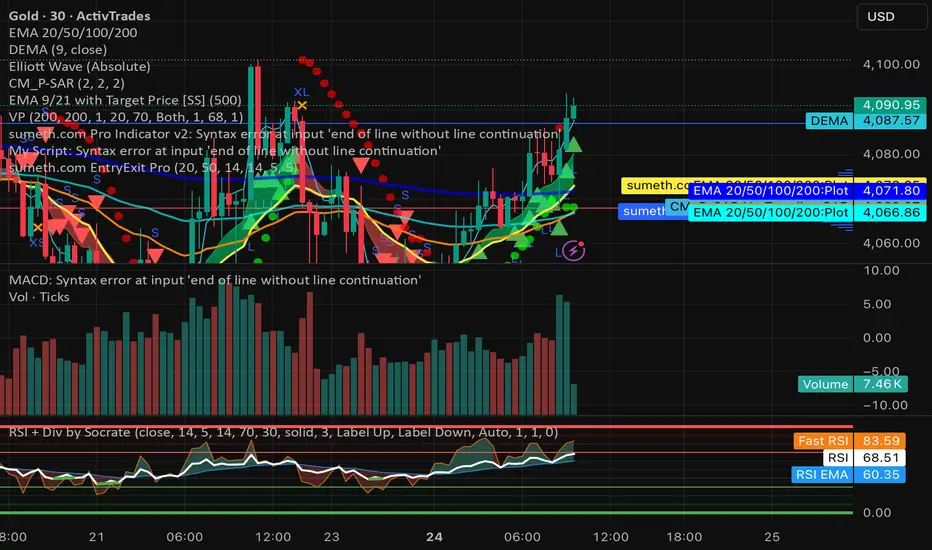
sumeth.com EntryExit ProA professional multi-filter trading tool combining price action, pattern detection, dynamic trend filters, RSI/MACD confirmations, and breakout logic. Designed for precise entry & exit in any market.
ATR Trailing Stop + HL2 VWAP + EMAsmain atr/ema script
use this to guage immediate trend on the 2m
use this to guage long term trend on thr 6h and one day charts.
Typicallly most accurate with futures.

S/R MTF// This Pine Script™ code is subject to the terms of the Mozilla Public License 2.0 at mozilla.org
// © fluxchart
//@version=6
//S&R; V2.12
const bool DEBUG = false
const bool fixSRs = true
const bool fixRetests = false
indicator("crr S/R MTF", overlay = true, max_labels_count = 500, max_lines_count = 500, max_boxes_count = 500, dynamic_requests = true)
const int maxSRInfoListSize = 10
const int maxBarInfoListSize = 3000
const int maxDistanceToLastBar = 500
const int minSRSize = 5
const int retestLabelCooldown = 3
const float tooCloseATR = 1.0 / 8.0
const int labelOffsetBars = 20
const int atrLen = 20
atr = ta.atr(atrLen)
avgVolume = ta.sma(volume, atrLen)
var int curTFMS = timeframe.in_seconds(timeframe.period) * 1000
var map alerts = map.new()
alerts.put("Retest", false)
alerts.put("Break", false)
srPivotLength = input.int(15, "Pivot Length", minval = 3, maxval = 50, group = "General Configuration", display = display.none)
srStrength = input.int(1, "Strength", , group = "General Configuration", display = display.none)
srInvalidation = input.string("Close", "Invalidation", , group = "General Configuration", display = display.none)
expandZones = input.string("Only Valid", "Expand Lines & Zones", options = , group = "General Configuration", display = display.none)
showInvalidated = input.bool(true, "Show Invalidated", group = "General Configuration", display = display.none)
timeframe1Enabled = input.bool(true, title = "", group = "Timeframes", inline = "timeframe1", display = display.none)
timeframe1 = input.timeframe("", title = "", group = "Timeframes", inline = "timeframe1", display = display.none)
timeframe2Enabled = input.bool(false, title = "", group = "Timeframes", inline = "timeframe2", display = display.none)
timeframe2 = input.timeframe("D", title = "", group = "Timeframes", inline = "timeframe2", display = display.none)
timeframe3Enabled = input.bool(false, title = "", group = "Timeframes", inline = "timeframe3", display = display.none)
timeframe3 = input.timeframe("W", title = "", group = "Timeframes", inline = "timeframe3", display = display.none)
showBreaks = input.bool(true, "Show Breaks", group = "Breaks & Retests", inline = "ShowBR", display = display.none)
showRetests = input.bool(true, "Show Retests", group = "Breaks & Retests", inline = "ShowBR", display = display.none)
avoidFalseBreaks = input.bool(false, "Avoid False Breaks", group = "Breaks & Retests", display = display.none)
breakVolumeThreshold = input.float(0.3, "Break Volume Threshold", minval = 0.1, maxval = 2.0, step = 0.1, group = "Breaks & Retests", tooltip = "Only taken into account if Avoid False Breakouts is enabled. Higher values mean it's less likely to be a break.", display = display.none)
inverseBrokenLineColor = input.bool(false, "Inverse Color After Broken", group = "Breaks & Retests", display = display.none)
styleMode = input.string("Lines", "Style", , group = "Style", display = display.none)
lineStyle = input.string("____", "Line Style", , group = "Style", display = display.none)
lineWidth = input.int(2, "Line Width", minval = 1, group = "Style", display = display.none)
zoneSize = input.float(1.0, "Zone Width", minval = 0.1, maxval = 10, step = 0.1, group = "Style", display = display.none)
zoneSizeATR = zoneSize * 0.075
supportColor = input.color(#08998180, "Support Color", group = "Style", inline = "RScolors", display = display.none)
resistanceColor = input.color(#f2364580, "Resistance Color", group = "Style", inline = "RScolors", display = display.none)
breakColor = input.color(color.blue, "Break Color", group = "Style", inline = "RScolors2", display = display.none)
textColor = input.color(#ffffff80, "Text Color", group = "Style", inline = "RScolors2", display = display.none)
enableRetestAlerts = input.bool(true, "Enable Retest Alerts", tooltip = "Needs Show Retests option enabled.", group = "Alerts", display = display.none)
enableBreakAlerts = input.bool(true, "Enable Break Alerts", tooltip = "Needs Show Breaks option enabled.", group = "Alerts", display = display.none)
insideBounds = (bar_index > last_bar_index - maxDistanceToLastBar)
type srInfo
int startTime
float price
string srType
int strength
string timeframeStr
bool ephemeral = false
int breakTime
array retestTimes
type srObj
srInfo info
bool startFixed
bool breakFixed
bool rendered
string combinedTimeframeStr
line srLine
box srBox
label srLabel
label breakLabel
array retestLabels
type barInfo
int t
int tc
float c
float h
float l
var allSRList = array.new()
//#region Find Val RTN Time
findValRtnTime (barInfo biList, valToFind, toSearch, searchMode, minTime, maxTime, int defVal = na) =>
int rtnTime = defVal
float minDiff = na
if biList.size() > 0
for i = biList.size() - 1 to 0
curBI = biList.get(i)
if curBI.t >= minTime and curBI.t < maxTime
toLook = (toSearch == "Low" ? curBI.l : toSearch == "High" ? curBI.h : curBI.c)
if searchMode == "Nearest"
curDiff = math.abs(valToFind - toLook)
if na(minDiff)
rtnTime := curBI.t
minDiff := curDiff
else
if curDiff <= minDiff
minDiff := curDiff
rtnTime := curBI.t
if searchMode == "Higher"
if toLook >= valToFind
rtnTime := curBI.t
break
if searchMode == "Lower"
if toLook <= valToFind
rtnTime := curBI.t
break
rtnTime
//#endregion
formatTimeframeString (string formatTimeframe, bool short = false) =>
timeframeF = (formatTimeframe == "" ? timeframe.period : formatTimeframe)
if str.contains(timeframeF, "D") or str.contains(timeframeF, "W") or str.contains(timeframeF, "S") or str.contains(timeframeF, "M")
timeframe.from_seconds(timeframe.in_seconds(timeframeF))
else
seconds = timeframe.in_seconds(timeframeF)
if seconds >= 3600
hourCount = int(seconds / 3600)
if short
str.tostring(hourCount) + "h"
else
str.tostring(hourCount) + " Hour" + (hourCount > 1 ? "s" : "")
else
if short
timeframeF + "m"
else
timeframeF + " Min"
renderSRObj (srObj sr) =>
if na(sr.info.breakTime) or showInvalidated
sr.rendered := true
endTime = nz(sr.info.breakTime, time + curTFMS * labelOffsetBars)
extendType = extend.none
if na(sr.info.breakTime)
extendType := extend.right
if expandZones == "Only Valid" and na(sr.info.breakTime)
extendType := extend.both
else if expandZones == "All"
extendType := extend.both
endTime := time + curTFMS * labelOffsetBars
labelTitle = formatTimeframeString(sr.info.timeframeStr)
if not na(sr.combinedTimeframeStr)
labelTitle := sr.combinedTimeframeStr
labelTitle += " | " + str.tostring(sr.info.price, format.mintick) + ((sr.info.ephemeral and DEBUG) ? " " : "")
if styleMode == "Lines"
// Line
sr.srLine := line.new(sr.info.startTime, sr.info.price, endTime, sr.info.price, xloc = xloc.bar_time, color = sr.info.srType == "Resistance" ? resistanceColor : supportColor, width = lineWidth, style = lineStyle == "----" ? line.style_dashed : lineStyle == "...." ? line.style_dotted : line.style_solid, extend = extendType)
// Label
sr.srLabel := label.new(extendType == extend.none ? ((sr.info.startTime + endTime) / 2) : endTime, sr.info.price, xloc = xloc.bar_time, text = labelTitle, textcolor = textColor, style = label.style_none)
else
// Zone
sr.srBox := box.new(sr.info.startTime, sr.info.price + atr * zoneSizeATR, endTime, sr.info.price - atr * zoneSizeATR, xloc = xloc.bar_time, bgcolor = sr.info.srType == "Resistance" ? resistanceColor : supportColor, border_color = na, text = labelTitle, text_color = textColor, extend = extendType, text_size = size.normal, text_halign = (extendType != extend.none) ? text.align_right : text.align_center)
// Break Label
if showBreaks
if not na(sr.info.breakTime)
sr.breakLabel := label.new(sr.info.breakTime, sr.info.price, "B", yloc = sr.info.srType == "Resistance" ? yloc.belowbar : yloc.abovebar, style = sr.info.srType == "Resistance" ? label.style_label_up : label.style_label_down, color = breakColor, textcolor = color.new(textColor, 0), xloc = xloc.bar_time, size = size.small)
if (time - curTFMS <= sr.info.breakTime) and (time + curTFMS >= sr.info.breakTime)
alerts.put("Break", true)
// Retest Labels
if showRetests
if sr.info.retestTimes.size() > 0
for i = sr.info.retestTimes.size() - 1 to 0
curRetestTime = sr.info.retestTimes.get(i)
cooldownOK = true
if sr.retestLabels.size() > 0
lastLabel = sr.retestLabels.get(0)
if math.abs(lastLabel.get_x() - curRetestTime) < curTFMS * retestLabelCooldown
cooldownOK := false
if cooldownOK and (curRetestTime >= sr.info.startTime) and (na(sr.info.breakTime) or curRetestTime < sr.info.breakTime)
if time - curTFMS <= curRetestTime and time >= curRetestTime
alerts.put("Retest", true)
sr.retestLabels.unshift(label.new(curRetestTime, sr.info.price, "R" + (DEBUG ? (" " + str.tostring(sr.info.price)) : ""), yloc = sr.info.srType == "Resistance" ? yloc.abovebar : yloc.belowbar, style = sr.info.srType == "Resistance" ? label.style_label_down : label.style_label_up, color = sr.info.srType == "Resistance" ? resistanceColor : supportColor, textcolor = color.new(textColor, 0), xloc = xloc.bar_time, size = size.small))
safeDeleteSRObj (srObj sr) =>
if sr.rendered
line.delete(sr.srLine)
box.delete(sr.srBox)
label.delete(sr.srLabel)
label.delete(sr.breakLabel)
if sr.retestLabels.size() > 0
for i = 0 to sr.retestLabels.size() - 1
curRetestLabel = sr.retestLabels.get(i)
label.delete(curRetestLabel)
sr.rendered := false
var allSRInfoList = array.new()
var barInfoList = array.new()
pivotHigh = ta.pivothigh(srPivotLength, srPivotLength)
pivotLow = ta.pivotlow(srPivotLength, srPivotLength)
barInfoList.unshift(barInfo.new(time, time_close, close, high, low))
if barInfoList.size() > maxBarInfoListSize
barInfoList.pop()
if insideBounds and barstate.isconfirmed
// Find Supports
if not na(pivotLow)
validSR = true
if allSRInfoList.size() > 0
for i = 0 to allSRInfoList.size() - 1
curRSInfo = allSRInfoList.get(i)
if (math.abs(curRSInfo.price - pivotLow) < atr * tooCloseATR) and na(curRSInfo.breakTime)
validSR := false
break
if validSR
newSRInfo = srInfo.new(barInfoList.get(srPivotLength).t, pivotLow, "Support", 1, timeframe.period)
newSRInfo.retestTimes := array.new()
//for i = 1 to srPivotLength
//curBI = barInfoList.get(i)
//if (curBI.l <= newSRInfo.price and curBI.c >= newSRInfo.price)
//newSRInfo.strength += 1
//if curBI.t != newSRInfo.startTime
//newSRInfo.retestTimes.unshift(curBI.t)
allSRInfoList.unshift(newSRInfo)
while allSRInfoList.size() > maxSRInfoListSize
allSRInfoList.pop()
// Find Resistances
if not na(pivotHigh)
validSR = true
if allSRInfoList.size() > 0
for i = 0 to allSRInfoList.size() - 1
curRSInfo = allSRInfoList.get(i)
if (math.abs(curRSInfo.price - pivotLow) < atr * tooCloseATR) and na(curRSInfo.breakTime)
validSR := false
break
if validSR
newSRInfo = srInfo.new(barInfoList.get(srPivotLength).t, pivotHigh, "Resistance", 1, timeframe.period)
newSRInfo.retestTimes := array.new()
//for i = 1 to srPivotLength
//curBI = barInfoList.get(i)
//if (curBI.h >= newSRInfo.price and curBI.c <= newSRInfo.price)
//newSRInfo.strength += 1
//if curBI.t != newSRInfo.startTime
//newSRInfo.retestTimes.unshift(curBI.t)
allSRInfoList.unshift(newSRInfo)
if allSRInfoList.size() > maxSRInfoListSize
allSRInfoList.pop()
// Handle SR Infos
if insideBounds and (srInvalidation == "Wick" or barstate.isconfirmed)
if allSRInfoList.size() > 0
for i = 0 to allSRInfoList.size() - 1
srInfo curSRInfo = allSRInfoList.get(i)
// Breaks
invHigh = (srInvalidation == "Close" ? close : high)
invLow = (srInvalidation == "Close" ? close : low)
closeTime = time
if na(curSRInfo.breakTime)
if curSRInfo.srType == "Resistance" and invHigh > curSRInfo.price
if (not avoidFalseBreaks) or (volume > avgVolume * breakVolumeThreshold)
curSRInfo.breakTime := closeTime
if inverseBrokenLineColor and (not curSRInfo.ephemeral) and curSRInfo.strength >= srStrength
ephSR = srInfo.new(closeTime, curSRInfo.price, "Support", curSRInfo.strength, curSRInfo.timeframeStr, true)
ephSR.retestTimes := array.new()
allSRInfoList.unshift(ephSR)
else if curSRInfo.srType == "Support" and invLow < curSRInfo.price
if (not avoidFalseBreaks) or (volume > avgVolume * breakVolumeThreshold)
curSRInfo.breakTime := closeTime
if inverseBrokenLineColor and (not curSRInfo.ephemeral) and curSRInfo.strength >= srStrength
ephSR = srInfo.new(closeTime, curSRInfo.price, "Resistance", curSRInfo.strength, curSRInfo.timeframeStr, true)
ephSR.retestTimes := array.new()
allSRInfoList.unshift(ephSR)
// Strength & Retests
if na(curSRInfo.breakTime) and time > curSRInfo.startTime and barstate.isconfirmed
if curSRInfo.srType == "Resistance" and high >= curSRInfo.price and close <= curSRInfo.price
int lastRetestTime = 0
if curSRInfo.retestTimes.size() > 0
lastRetestTime := curSRInfo.retestTimes.get(0)
if lastRetestTime != time
if not curSRInfo.ephemeral
curSRInfo.strength += 1
curSRInfo.retestTimes.unshift(time)
else if curSRInfo.srType == "Support" and low <= curSRInfo.price and close >= curSRInfo.price
int lastRetestTime = 0
if curSRInfo.retestTimes.size() > 0
lastRetestTime := curSRInfo.retestTimes.get(0)
if lastRetestTime != time
if not curSRInfo.ephemeral
curSRInfo.strength += 1
curSRInfo.retestTimes.unshift(time)
fixSRToTimeframe (srObj sr) =>
srMS = math.max(timeframe.in_seconds(sr.info.timeframeStr), timeframe.in_seconds()) * 1000
if (not sr.startFixed)
if not sr.info.ephemeral
if sr.info.srType == "Resistance"
sr.info.startTime := findValRtnTime(barInfoList, sr.info.price, "High", "Nearest", sr.info.startTime - srMS, sr.info.startTime + srMS, sr.info.startTime)
else
sr.info.startTime := findValRtnTime(barInfoList, sr.info.price, "Low", "Nearest", sr.info.startTime - srMS, sr.info.startTime + srMS, sr.info.startTime)
sr.startFixed := true
else
if allSRList.size() > 0
for i = 0 to allSRList.size() - 1
curSR = allSRList.get(i)
if (not curSR.info.ephemeral) and (not na(curSR.info.breakTime)) and curSR.info.price == sr.info.price and ((sr.info.srType == "Resistance" and curSR.info.srType == "Support") or (sr.info.srType == "Support" and curSR.info.srType == "Resistance"))
if curSR.breakFixed
sr.info.startTime := curSR.info.breakTime
sr.startFixed := true
break
if not na(sr.info.breakTime)
if (not sr.breakFixed)
if sr.info.srType == "Resistance"
sr.info.breakTime := findValRtnTime(barInfoList, sr.info.price, srInvalidation == "Wick" ? "High" : "Close", "Higher", sr.info.breakTime - srMS, sr.info.breakTime + srMS, sr.info.breakTime)
else
sr.info.breakTime := findValRtnTime(barInfoList, sr.info.price, srInvalidation == "Wick" ? "Low" : "Close", "Lower", sr.info.breakTime - srMS, sr.info.breakTime + srMS, sr.info.breakTime)
sr.breakFixed := true
if sr.info.retestTimes.size() > 0 and fixRetests
for i = 0 to sr.info.retestTimes.size() - 1
curRetestTime = sr.info.retestTimes.get(i)
retestStartTime = curRetestTime - srMS
retestStartTime := math.max(retestStartTime, sr.info.startTime + 1)
retestEndTime = curRetestTime + srMS
if not na(sr.info.breakTime)
retestEndTime := math.min(retestEndTime, sr.info.breakTime - 1)
if sr.info.srType == "Resistance"
sr.info.retestTimes.set(i, findValRtnTime(barInfoList, sr.info.price, "High", "Higher", retestStartTime, retestEndTime, sr.info.retestTimes.get(i)))
else
sr.info.retestTimes.set(i, findValRtnTime(barInfoList, sr.info.price, "Low", "Lower", retestStartTime, retestEndTime, sr.info.retestTimes.get(i)))
getSR (srObj list, srPrice, eph, srType, timeframeStr) =>
srObj rtnSR = na
if list.size() > 0
for i = 0 to list.size() - 1
curSR = list.get(i)
if curSR.info.price == srPrice and curSR.info.ephemeral == eph and curSR.info.srType == srType and curSR.info.timeframeStr == timeframeStr
rtnSR := curSR
break
rtnSR
// Handle SR
handleTF (tfStr, tfEnabled) =>
if tfEnabled
tfSRInfoList = request.security(syminfo.tickerid, tfStr, allSRInfoList)
if not na(tfSRInfoList) and tfSRInfoList.size() > 0
for i = 0 to tfSRInfoList.size() - 1
srInfo curSRInfo = tfSRInfoList.get(i)
if fixSRs
currentSameSR = getSR(allSRList, curSRInfo.price, curSRInfo.ephemeral, curSRInfo.srType, curSRInfo.timeframeStr)
if not na(currentSameSR)
if currentSameSR.startFixed
curSRInfo.startTime := currentSameSR.info.startTime
if currentSameSR.breakFixed
curSRInfo.breakTime := currentSameSR.info.breakTime
curSRInfo.retestTimes := currentSameSR.info.retestTimes
// All other info should be replaced except fixed start, break and all retests.
currentSameSR.info := curSRInfo
if not currentSameSR.breakFixed
fixSRToTimeframe(currentSameSR)
else
srObj newSRObj = srObj.new(curSRInfo)
// We handle retests in current timeframe so no need to get them from upper.
newSRObj.info.retestTimes := array.new()
newSRObj.retestLabels := array.new()
fixSRToTimeframe(newSRObj)
allSRList.unshift(newSRObj)
else
srObj newSRObj = srObj.new(curSRInfo)
newSRObj.retestLabels := array.new()
allSRList.unshift(newSRObj)
true
if (bar_index > last_bar_index - maxDistanceToLastBar * 8) and barstate.isconfirmed
if not fixSRs
if allSRList.size() > 0
for i = 0 to allSRList.size() - 1
srObj curSRObj = allSRList.get(i)
safeDeleteSRObj(curSRObj)
allSRList.clear()
handleTF(timeframe1, timeframe1Enabled)
handleTF(timeframe2, timeframe2Enabled)
handleTF(timeframe3, timeframe3Enabled)
if allSRList.size() > 0
for i = 0 to allSRList.size() - 1
srObj curSRObj = allSRList.get(i)
safeDeleteSRObj(curSRObj)
tooClose = false
for j = 0 to allSRList.size() - 1
closeSR = allSRList.get(j)
if closeSR.rendered and math.abs(closeSR.info.price - curSRObj.info.price) <= tooCloseATR * atr and closeSR.info.srType == curSRObj.info.srType and closeSR.info.ephemeral == curSRObj.info.ephemeral
tooClose := true
if not str.contains((na(closeSR.combinedTimeframeStr) ? formatTimeframeString(closeSR.info.timeframeStr) : closeSR.combinedTimeframeStr), formatTimeframeString(curSRObj.info.timeframeStr))
if na(closeSR.combinedTimeframeStr)
closeSR.combinedTimeframeStr := formatTimeframeString(closeSR.info.timeframeStr) + " & " + formatTimeframeString(curSRObj.info.timeframeStr)
else
closeSR.combinedTimeframeStr += " & " + formatTimeframeString(curSRObj.info.timeframeStr)
break
if (curSRObj.info.strength >= srStrength) and (na(curSRObj.info.breakTime) or (curSRObj.info.breakTime - curSRObj.info.startTime) >= minSRSize * curTFMS) and (not tooClose)
renderSRObj(curSRObj)
// Current Timeframe Retests
if allSRList.size() > 0 and barstate.isconfirmed
for i = 0 to allSRList.size() - 1
srObj curSR = allSRList.get(i)
if na(curSR.info.breakTime) and time > curSR.info.startTime
if curSR.info.srType == "Resistance" and high >= curSR.info.price and close <= curSR.info.price
int lastRetestTime = 0
if curSR.info.retestTimes.size() > 0
lastRetestTime := curSR.info.retestTimes.get(0)
if lastRetestTime != time
curSR.info.retestTimes.unshift(time)
else if curSR.info.srType == "Support" and low <= curSR.info.price and close >= curSR.info.price
int lastRetestTime = 0
if curSR.info.retestTimes.size() > 0
lastRetestTime := curSR.info.retestTimes.get(0)
if lastRetestTime != time
curSR.info.retestTimes.unshift(time)
//plotchar(alerts.get("Break") ? high : na, "", "✅", size = size.normal)
//plotchar(alerts.get("Retest") ? high : na, "", "❤️", size = size.normal, location = location.belowbar)
alertcondition(alerts.get("Retest"), "New Retest", "")
alertcondition(alerts.get("Break"), "New Break", "")
if enableRetestAlerts and alerts.get("Retest")
alert("New Retests Occured.")
if enableBreakAlerts and alerts.get("Break")
alert("New Breaks Occured.")

[MTX] Weekly Support & Resistance Weekly Support & Resistance
Overview
Discover key market structure with this all-in-one indicator:
Weekly Support & Resistance (SR) levels , Fair Value Gap (FVG) detection , and Automatic Fibonacci retracements .
Designed for MTX traders, it plots non-repainting weekly highs/lows/opens/closes, highlights unmitigated FVGs for potential imbalances, and auto-draws Fib levels, Perfect for swing/day traders on XAUUSD.
🚀 Key Features
- Weekly SR Levels : Plots previous week's High (resistance), Low (support), Open, and Close. Optional historical levels (Week -2/-3).
- SR Zones : Customizable % zones around levels for dynamic support/resistance bands. Fill colors for easy visualization.
- FVG Detection : Identifies bullish (green) and bearish (red) Fair Value Gaps on your chart timeframe.
- buy/sell Signals :
- Trend Filter : Optional EMA/SMA to filter signals
- Auto Fibonacci : auto-retracement with 20+ levels (0%, 23.6%, 38.2%, 50%, 61.8%, 100%, extensions to 423.6%, negatives). Custom colors, labels, and background fills.
- Alerts: Built-in for FVG creation/mitigation + all buy/sell signals. Set up once for real-time notifications.
⚠️ Important Disclaimer
This indicator is for educational and analysis purposes only. It provides visual tools and signals based on historical price action— not financial advice. Past performance ≠ future results. Trading involves risk; use proper risk management. Backtest thoroughly. No guarantees of profitability. Consult a financial advisor.
#tradingview #smc #MTX #fvg #fibonacci #supportresistance

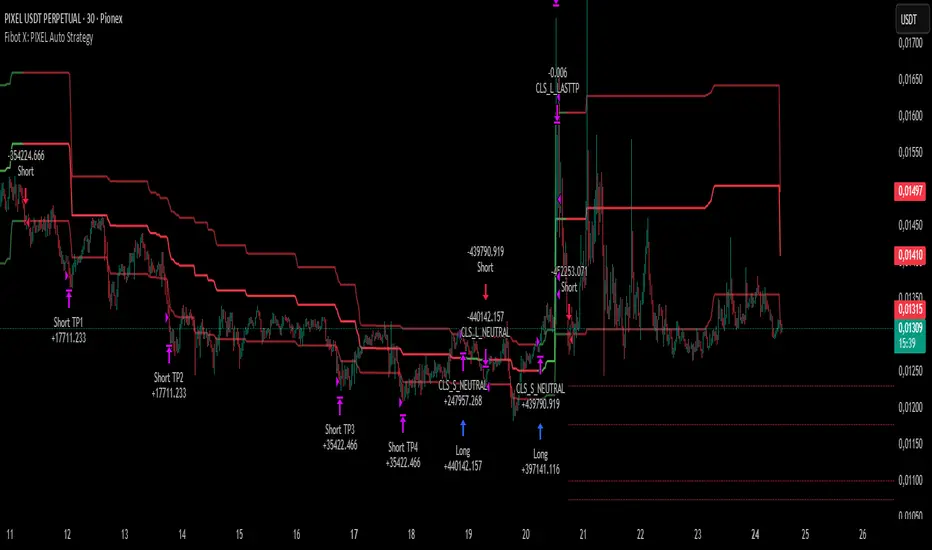
Fibot X: PIXEL Auto StrategyFibot X — PIXEL Optimized is an algorithmic trading system designed specifically for the PIXEL/USDT asset.
The algorithm manages trades automatically using a structured multi-target exit model (TPs) and an internal risk control mechanism based on a predefined stop loss.
This version has been developed through extensive analysis of real market data and comes fully configured.
Users are not required to adjust any parameters: the configuration is pre-calibrated to deliver optimal performance on PIXEL while minimizing complexity.
⚠️ Key Recommendation:
This system is designed to operate strictly with x1 leverage.
Using higher leverage disrupts the system’s balance and compromises risk management.
The most efficient operating method is to trade using 100% of available capital, exactly as it is configured by default.
The profit-taking structure and drawdown control are designed to work over full capital allocation.
Fibot X does not chase micro-movements or aggressive scalping.
Its goal is to capture consistent market moves and monetize them through smart partial exits, avoiding premature re-entries or unnecessary overexposure.
In addition, its parameters are continuously updated based on performance metrics, ensuring the strategy remains aligned with current market conditions and always seeks maximum efficiency within a controlled risk framework.
Fibot X requires no external indicators and no constant user intervention.
Its philosophy is simple: consistency, automation, and disciplined execution.
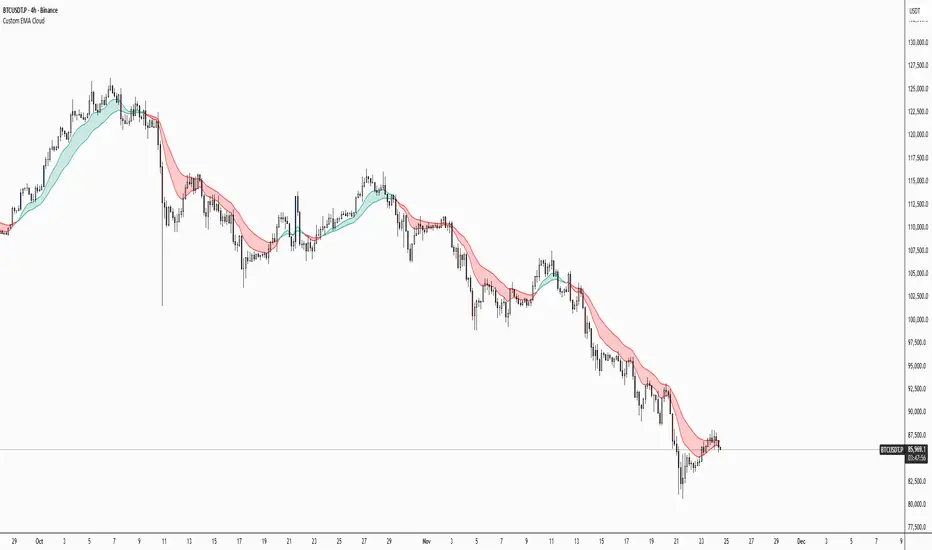
Ellipse Price Action Indicator v2 (Upgraded)
This upgraded Ellipse Price Action Indicator (EPAI v2) to take high-accuracy trades.
I am explaining it as if you are looking at the chart step by step, so you will understand exactly:
-When to buy
-When to
-When to avoid
-How to read Strength Meter
-How Ellipse zones work
⭐ 1. THE BASICS — What This Indicator Actually Does
This indicator tracks:
✔ The “Elliptical Path” of price
Like a planet revolving around the Sun, price “oscillates” around a center.
The indicator detects this hidden mathematical path using:
Two Focus Points (Fast MA & Slow MA)
Curved Ellipse boundaries
Compression of price
Momentum of trend
Breakout zones
⭐ 2. UNDERSTANDING THE 3 ZONES
🔴 UPPER ZONE = Sell Zone
Price is near the upper ellipse boundary → overbought space.
🟢 LOWER ZONE = Buy Zone
Price near lower ellipse boundary → oversold space.
🔵 CENTRAL ZONE = No Trade Zone
Price swinging inside the ellipse center → noise.
Only trade in UPPER or LOWER zones.
Never in the central zone.
⭐ 3. THE MOST IMPORTANT PART — Strength Meter v2
Strength Meter v2 (0 to 100%) is the core filter.
✔ Above 70% → High winning probability (take trade)
✔ 60–70% → Medium probability (trade if confident)
❌ Below 60% → Avoid trade
Strength combines:
Ellipse compression
Momentum slope
Price position curve
Eccentricity
Trend direction
This alone removes 70% bad trades.
⭐ 4. BUY SETUP (Exact Rules)
You get a BUY only if all conditions match:
① Price goes to lower ellipse zone
② Compression is ON (ellipse is tight)
③ Momentum slope direction = UP
④ Focus Lines Cross Bullish (Fast > Slow)
⑤ Strength v2 ≥ your threshold (default 60%)
⑥ A BUY signal prints (triangle UP)
When these align →
🟢 BUY with high accuracy
Best Accuracy Buy is:
Price in lower zone
Strength ≥ 0.75
Slope UP
Ellipse compressed
⭐ 5. SELL SETUP (Exact Rules)
Same logic reversed:
① Price in upper ellipse zone
② Compression ON
③ Momentum slope DOWN
④ Focus Lines cross bearish (Fast < Slow)
⑤ Strength v2 ≥ threshold
⑥ SELL signal prints (triangle DOWN)
This means:
🔴 SELL with high accuracy
Best Accuracy Sell is:
Price in upper zone
Strength ≥ 0.75
Slope DOWN
Ellipse compressed
⭐ 6. BREAKOUT TRADES (Optional but powerful)
When price breaks above/below ellipse:
🔸 Upper Breakout → SELL (if strength strong)
🔸 Lower Breakout → BUY (if strength strong)
Breakout signals are marked by orange arrows.
Breakouts are taken only if:
Strength v2 > 50%
Slope supports breakout
Compression exists before breakout
Breakout trades catch trend continuation.
⭐ 7. HOW TO CONFIRM A STRONG TRADE
Look at the table on the chart:
✔ Strength v2 ≥ 70% (GREEN)
✔ Compression = GREEN
✔ Slope direction = UP (for buy) or DOWN (for sell)
✔ Zone = LOWER or UPPER
✔ Eccentricity = LOW (<0.5 means smooth trend)
If these line up →
⭐ High-probability entry.
⭐ 8. WHEN YOU SHOULD NOT TRADE
❌ If price is in Central Zone
❌ Strength < 60
❌ No compression detected
❌ Slope is flat or against direction
❌ Only one condition is matching
❌ Eccentricity is too large
(Big ellipse = unpredictable swings)
⭐ 9. What Is the Accuracy Level?
In trending markets → 75% to 85% accuracy
In ranging markets → 50% (use compression filter to avoid)
The indicator is designed to avoid bad market conditions automatically.
⭐ 10. BEST TIMEFRAMES
✔ 5m, 15m, 1H → Intraday
✔ 4H, 1D → Swing Trading
✔ NOT recommended below 1m timeframe
⭐ SUMMARY (EASY VERSION)
🟢 BUY:
Lower zone + compression + bullish slope + strong focus cross + strength ≥ 60
🔴 SELL:
Upper zone + compression + bearish slope + strong focus cross + strength ≥ 60
🟠 Breakout:
Upper/lower breakout + strength ≥ 50
🔵 Avoid:
Central zone or weak strength

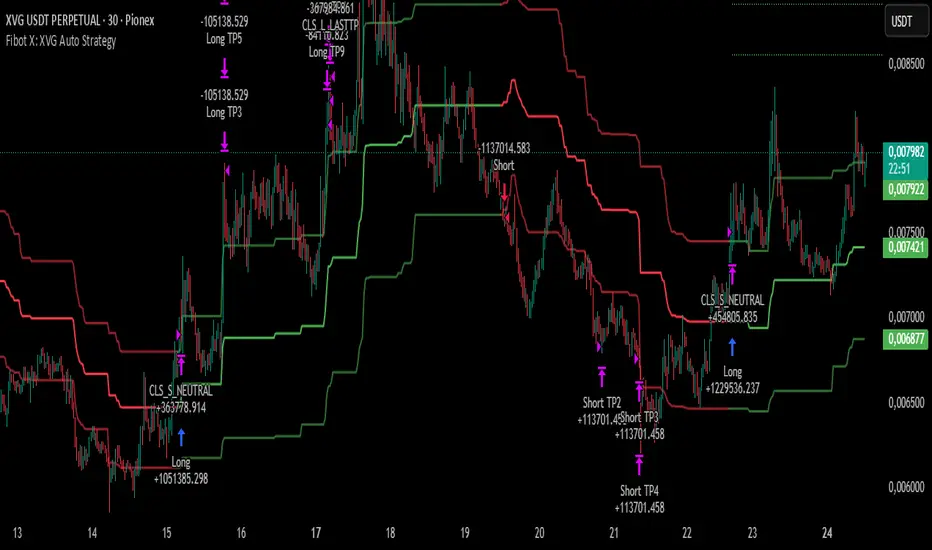
Fibot X: XVG Auto StrategyFibot X — XVG Optimized is an algorithmic trading system designed specifically for the XVG/USDT asset.
The algorithm manages trades automatically using a structured multi-target exit model (TPs) and an internal risk control mechanism based on a predefined stop loss.
This version has been developed through extensive analysis of real market data and comes fully configured.
Users are not required to adjust any parameters: the configuration is pre-calibrated to deliver optimal performance on XVG while minimizing complexity.
⚠️ Key Recommendation:
This system is designed to operate strictly with x1 leverage.
Using higher leverage disrupts the system’s balance and compromises risk management.
The most efficient operating method is to trade using 100% of available capital, exactly as it is configured by default.
The profit-taking structure and drawdown control are designed to work over full capital allocation.
Fibot X does not chase micro-movements or aggressive scalping.
Its goal is to capture consistent market moves and monetize them through smart partial exits, avoiding premature re-entries or unnecessary overexposure.
In addition, its parameters are continuously updated based on performance metrics, ensuring the strategy remains aligned with current market conditions and always seeks maximum efficiency within a controlled risk framework.
Fibot X requires no external indicators and no constant user intervention.
Its philosophy is simple: consistency, automation, and disciplined execution.
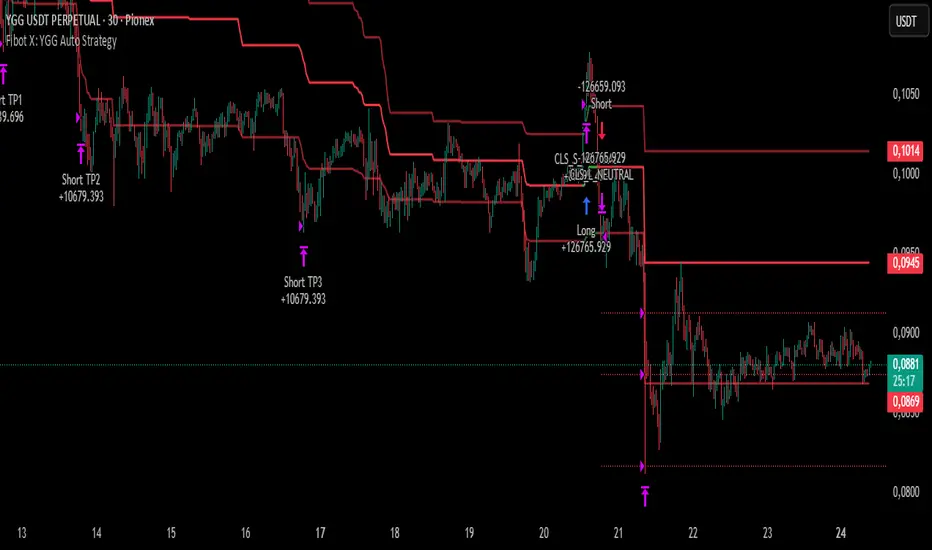
Fibot X: YGG Auto StrategyFibot X — YGG Optimized is an algorithmic trading system designed specifically for the YGG/USDT asset.
The algorithm manages trades automatically using a structured multi-target exit model (TPs) and an internal risk control mechanism based on a predefined stop loss.
This version has been developed through extensive analysis of real market data and comes fully configured.
Users are not required to adjust any parameters: the configuration is pre-calibrated to deliver optimal performance on YGG while minimizing complexity.
⚠️ Key Recommendation:
This system is designed to operate strictly with x1 leverage.
Using higher leverage disrupts the system’s balance and compromises risk management.
The most efficient operating method is to trade using 100% of available capital, exactly as it is configured by default.
The profit-taking structure and drawdown control are designed to work over full capital allocation.
Fibot X does not chase micro-movements or aggressive scalping.
Its goal is to capture consistent market moves and monetize them through smart partial exits, avoiding premature re-entries or unnecessary overexposure.
In addition, its parameters are continuously updated based on performance metrics, ensuring the strategy remains aligned with current market conditions and always seeks maximum efficiency within a controlled risk framework.
Fibot X requires no external indicators and no constant user intervention.
Its philosophy is simple: consistency, automation, and disciplined execution.
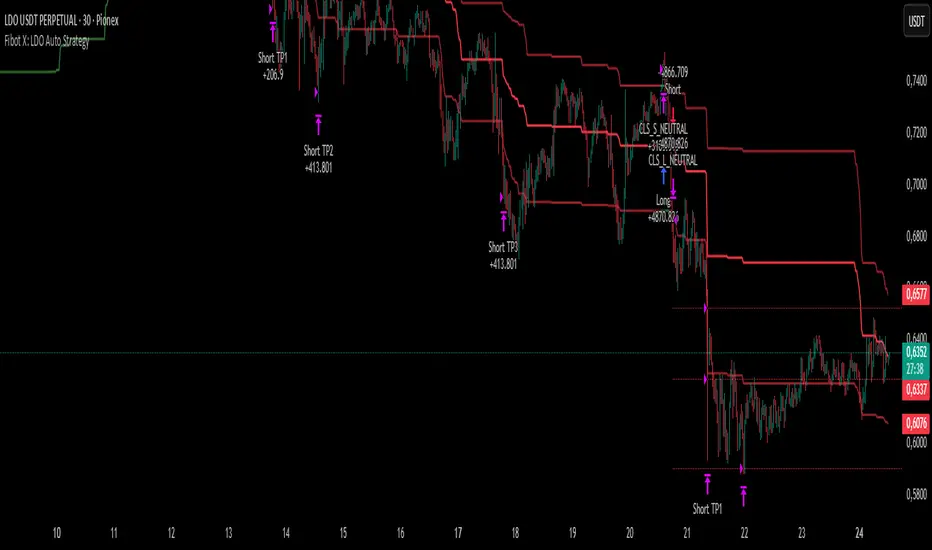
Fibot X: LDO Auto StrategyFibot X — LDO Optimized is an algorithmic trading system designed specifically for the LDO/USDT asset.
The algorithm manages trades automatically using a structured multi-target exit model (TPs) and an internal risk control mechanism based on a predefined stop loss.
This version has been developed through extensive analysis of real market data and comes fully configured.
Users are not required to adjust any parameters: the configuration is pre-calibrated to deliver optimal performance on LDO while minimizing complexity.
⚠️ Key Recommendation:
This system is designed to operate strictly with x1 leverage.
Using higher leverage disrupts the system’s balance and compromises risk management.
The most efficient operating method is to trade using 100% of available capital, exactly as it is configured by default.
The profit-taking structure and drawdown control are designed to work over full capital allocation.
Fibot X does not chase micro-movements or aggressive scalping.
Its goal is to capture consistent market moves and monetize them through smart partial exits, avoiding premature re-entries or unnecessary overexposure.
In addition, its parameters are continuously updated based on performance metrics, ensuring the strategy remains aligned with current market conditions and always seeks maximum efficiency within a controlled risk framework.
Fibot X requires no external indicators and no constant user intervention.
Its philosophy is simple: consistency, automation, and disciplined execution.
Fibot X: CAKE Auto StrategyFibot X — CAKE Optimized is an algorithmic trading system designed specifically for the CAKE/USDT asset.
The algorithm manages trades automatically using a structured multi-target exit model (TPs) and an internal risk control mechanism based on a predefined stop loss.
This version has been developed through extensive analysis of real market data and comes fully configured.
Users are not required to adjust any parameters: the configuration is pre-calibrated to deliver optimal performance on CAKE while minimizing complexity.
⚠️ Key Recommendation:
This system is designed to operate strictly with x1 leverage.
Using higher leverage disrupts the system’s balance and compromises risk management.
The most efficient operating method is to trade using 100% of available capital, exactly as it is configured by default.
The profit-taking structure and drawdown control are designed to work over full capital allocation.
Fibot X does not chase micro-movements or aggressive scalping.
Its goal is to capture consistent market moves and monetize them through smart partial exits, avoiding premature re-entries or unnecessary overexposure.
In addition, its parameters are continuously updated based on performance metrics, ensuring the strategy remains aligned with current market conditions and always seeks maximum efficiency within a controlled risk framework.
Fibot X requires no external indicators and no constant user intervention.
Its philosophy is simple: consistency, automation, and disciplined execution.

Thirdeyechart Global Gold PercentageThe global gold percentage – Percentage Change Indicator is a TradingView tool developed to help traders monitor multiple currency pairs and precious metals in one glance. This indicator was coded personally, using custom formulas to calculate the percentage change for each symbol over selected timeframes, making it unique and fully tailored to individual analysis needs.
Users can input any symbols they wish to track as a comma-separated list, making it highly flexible. The script automatically calculates percentage changes for Daily (D), 1-Hour (H1), and 4-Hour (H4) timeframes. Positive changes are highlighted in blue and negative changes in red, allowing for an instant visual representation of market movements. The table updates in real-time, giving traders immediate feedback without needing to switch between charts.
Designed with simplicity and functionality in mind, this indicator is ideal for intraday traders, swing traders, or anyone who wants to keep an eye on multiple markets efficiently. It works for currency pairs, metals like gold (XAUUSD, XAUJPY), or any TradingView-available symbol. The table is positioned at the top-right corner of the chart and automatically adapts to the number of symbols entered.
This script is purely informational and educational, providing a clear view of price movements but not offering buy or sell signals. Traders should perform their own analysis and risk management before making any trading decisions.
Disclaimer / Copyright:
© 2025 Thirdeyechart. All rights reserved. This indicator is for educational and informational purposes only. The author is not responsible for any trading losses or financial decisions made based on this script. Redistribution, copying, or commercial use of this code without permission is strictly prohibited.

Fractals Trend [BigBeluga]🔵 OVERVIEW
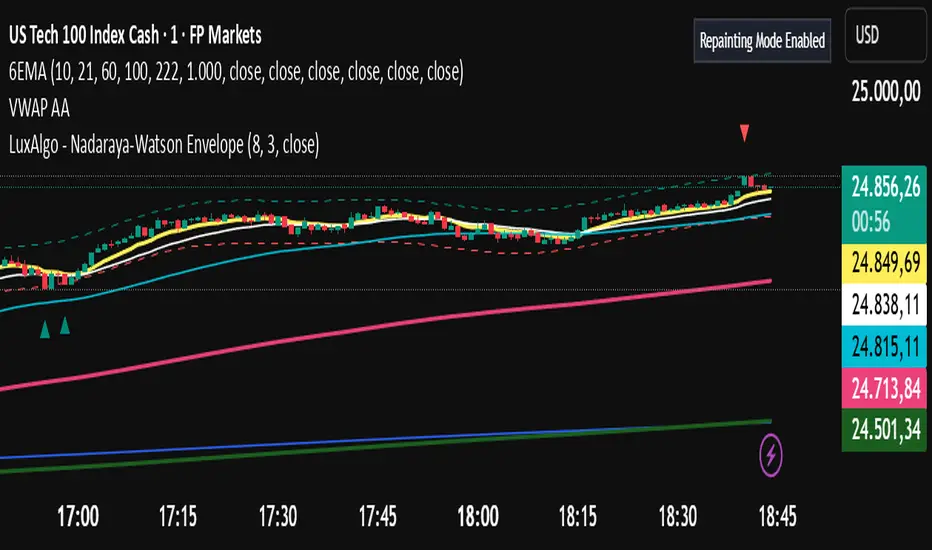
Fractals Trend is a trend-following overlay that leverages fractal swing points to define dynamic support and resistance zones. By storing and averaging recent high and low fractals, it determines trend direction and plots a smooth band that flips depending on market bias—displaying support during uptrends and resistance during downtrends .
🔵 CONCEPTS
Fractal Swings: Fractals are identified using a customizable length. A high fractal forms when the current high is the highest in a range; a low fractal when the current low is the lowest.
Fractal Memory: The indicator keeps a rolling window of recent high and low fractals inside arrays, limited by the user-defined storage quantity.
switch
upperF => FracrtalsUpper.push(high )
lowerF => FracrtalsLower.push(low )
FracrtalsUpper.size() > fCount => FracrtalsUpper.shift()
FracrtalsLower.size() > fCount => FracrtalsLower.shift()
Trend Detection: Price crossing above the average, min/max or median high fractals signals an uptrend; crossing below average, min/max or median low fractals signals a downtrend.
Dynamic Band Plotting: Depending on the trend, the script plots the average of either the upper or lower fractals as a trailing support or resistance line.
Visual Confirmation: Fractal labels appear as triangle markers at highs and lows, providing additional structural context.
🔵 FEATURES
Automatically detects high and low fractals using customizable length.
Stores a defined number of fractals to smooth out noise and reduce false signals.
Flips trend bias dynamically with colored band and smooth transitions.
Plots fractal-based support in bullish trends, resistance in bearish trends.
Triangle markers show real-time fractal highs and lows.
Fully configurable visuals, color themes, and fractal detection logic.
Clean, non-intrusive overlay that works on any market or timeframe.
🔵 HOW TO USE
Use the colored band as a directional filter: green = uptrend (support), orange = downtrend (resistance).
Combine with entry signals or break/retest strategies when price approaches the band.
Use triangle markers to confirm structural swing points.
Adjust Fractals Length to tune sensitivity—shorter values detect quicker shifts, longer values reduce noise.
Change the fractal bands type to adapt trend detection to different market conditions.
Use in conjunction with momentum or volume tools for confluence.
🔵 CONCLUSION
Fractals Trend offers a lightweight, intuitive way to track market bias using price structure alone. Its smart switching logic and clean visuals make it a powerful tool for trend traders seeking structure-based dynamic S/R—without laggy moving averages or overcomplicated signals.

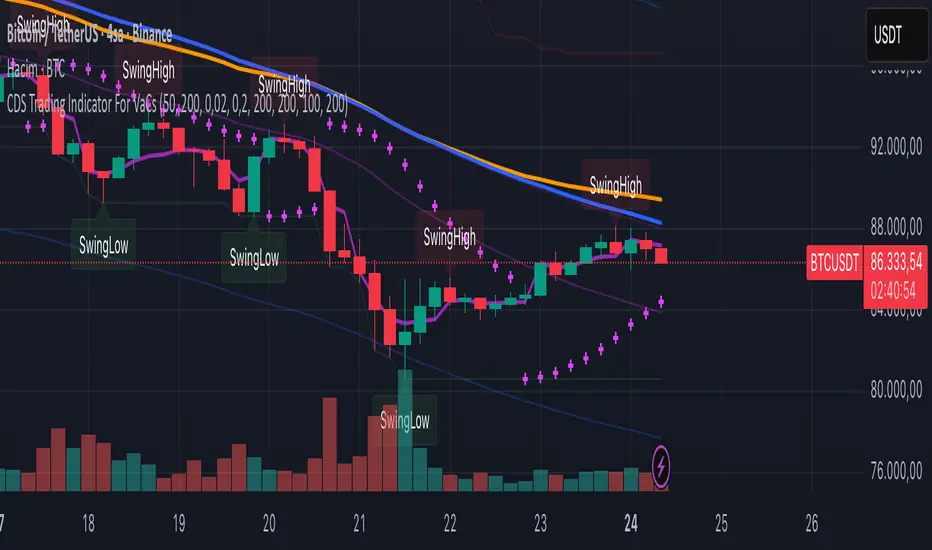
VaCs, Trade Indic## 🎛 **MAIN PRICE CHART (Primary Panel)**
Overlay on the main candlestick chart:
* 200 EMA + 50 EMA trend ribbons
* Parabolic SAR
* Logarithmic Growth Curves (LGC / LGH)
* Stock-to-Flow (S2F) bands
* Linear, Log, and Polynomial Regression Channels
* Liquidity mapping:
* Buyside liquidity
* Sellside liquidity
* Fair Value Gaps (FVG)
* Order Blocks
* Imbalance Zones
* Smart Money Concepts (SMC):
* HH, HL, LH, LL structure
* BOS (Break of Structure)
* CHOCH (Change of Character)
* Whale Accumulation Layers:
* Wallet cohorts (1–10 / 10–100 / 100–1K / 1K–10K)
* Whale inflow/outflow
* Exchange net positions
* On-chain macro layers:
* NUPL
* MVRV
* SOPR
* Realized price bands
* Miner Position Indicator
* Hash Ribbons
* Market cycle markers:
* Halving cycles
* Accumulation, Markup, Distribution, Markdown phases
* Fundamental macro overlays:
* Fed interest rate events
* CPI releases
* ETF inflow/outflow markers
* Major global news catalysts
---
## 📊 **SUB-PANEL #1 — Momentum Oscillators**
Add a clearly separated lower panel containing:
* MACD (standard)
* RSI (14) **with divergence lines**
* Stochastic RSI
* MFI (Money Flow Index)
This panel must be independent and **not overlayed** on the main chart.
---
## 📊 **SUB-PANEL #2 — Volume & Flow Analytics**
A second independent lower panel showing:
* Volume Profile
* On-Balance Volume (OBV)
* **VWAP** (Volume Weighted Average Price)
* Must be clean, visible, and used for trend confirmation
* Use logic equivalent to TradingView Pine Script v6 **ta.vwap()**
* Represents a stable VWAP line across the full dataset
* Funding Rate
* Open Interest (OI)
* CVD (Cumulative Volume Delta)
---
## 📊 **SUB-PANEL #3 — On-Chain Analytics Panel**
Add a dedicated panel for:
* Exchange inflow/outflow
* Miner flow
* Realized profits vs realized losses
* Stablecoin Supply Ratio (SSR)
* Any high-frequency on-chain volatility signals
---