Índice de úlcera
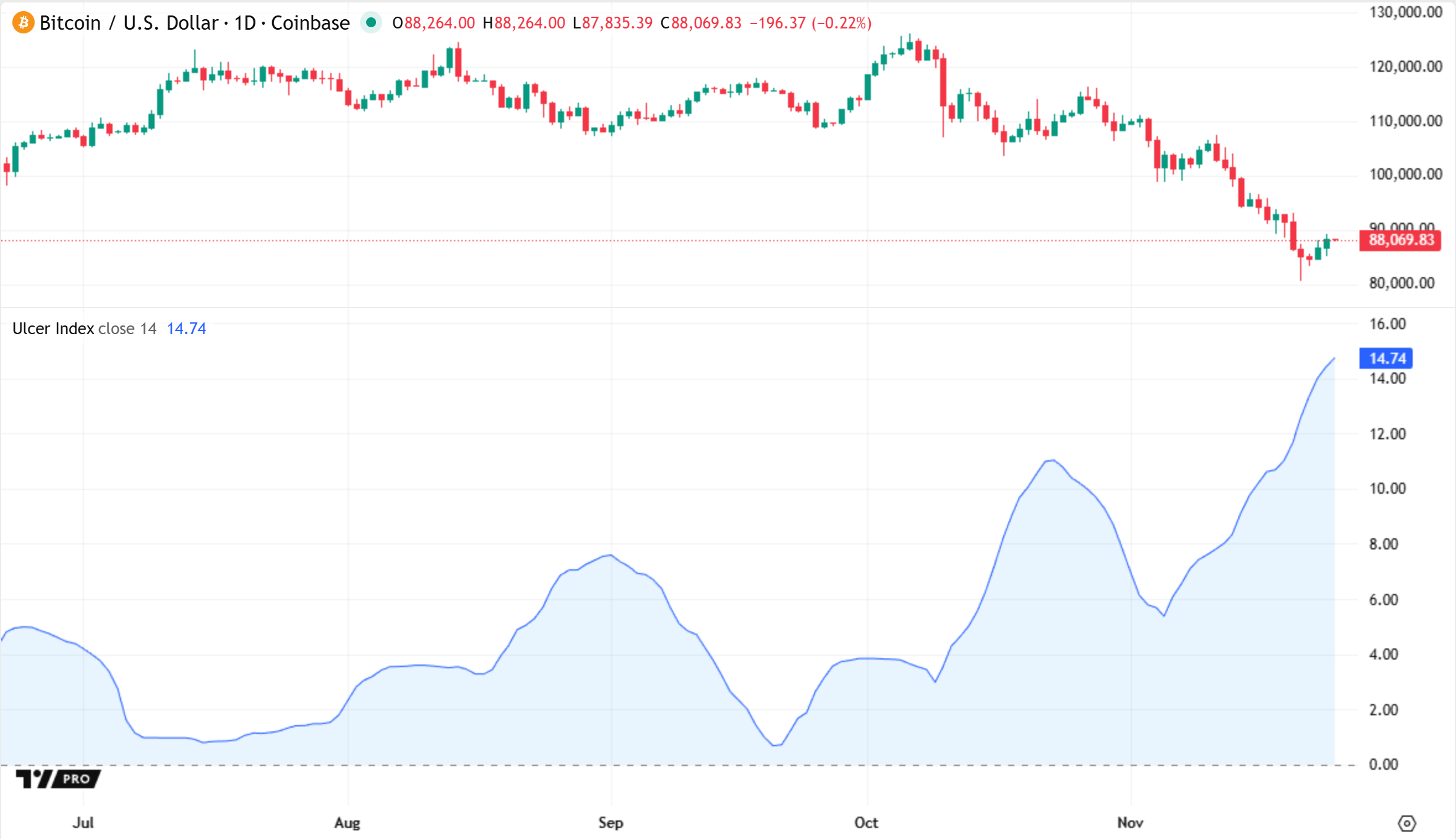
El índice Ulcer, ideado por Peter Martin en 1987 y publicado por Peter Martin y Byron McCann en 1989, es un indicador de volatilidad que estima el riesgo a la baja. Mide la profundidad y la duración de las caídas relativas de los precios desde los máximos anteriores durante un período de referencia definido. El nombre del indicador proviene de la idea de que las caídas de precios causan estrés a la mayoría de los traders, estrés que se asocia con las úlceras de estómago.
A diferencia de las medidas de volatilidad, como la desviación típica, que capturan tanto la volatilidad al alza como a la baja (riesgo), el índice de úlcera aísla las caídas para proporcionar una estimación de la volatilidad a la baja para evaluar las posiciones largas. Los traders suelen utilizar el índice de úlcera para analizar el riesgo a la baja de un instrumento y comparar los niveles de riesgo entre instrumentos.
Cálculo
El Índice de úlcera mide la media cuadrática de las caídas del precio desde el valor más alto durante un periodo de referencia seleccionado. El cálculo es el siguiente:
Precio más alto = Máximo (Precio, Longitud)DD = ((Precio − Precio más alto) / Precio más alto) × 100Media cuadrática de DD = Suma (DD × DD, Longitud) / LongitudÍndice de úlcera = √ (DD cuadrático medio)Donde:
- Longitud es el número de barras en el periodo
- Precio más alto es el valor del precio más alto en el periodo
- DD es el porcentaje de caída desde el valor más alto en cada barra
- La media cuadrática DD es la media de las caídas cuadráticas durante el periodo
- El índice de úlcera es la raíz cuadrada de la caída media al cuadrado
El índice resultante proporciona una estimación directa de la volatilidad a la baja durante un período retrospectivo:
- Los valores más bajos indican precios relativamente estables o en aumento con caídas mínimas a lo largo del período
- Los valores más altos indican caídas de precios más grandes y sostenidas durante el período
El valor del indicador varía en función de la profundidad y la persistencia de las caídas durante el periodo de referencia, con un énfasis creciente en las caídas de precios más grandes y prolongadas.
Además de medir el riesgo potencial a la baja de un instrumento y comparar los riesgos potenciales entre múltiples instrumentos, Peter Martin sugiere sustituir la desviación estándar por el índice de úlcera en otras métricas relacionadas con el riesgo.
Por ejemplo, el índice de rendimiento de úlcera (UPI), también conocido como ratio de Martin, es una alternativa al ratio de Sharpe que mide el rendimiento ajustado al riesgo dividiendo el exceso de rendimiento medio por el índice de úlcera en lugar de por la desviación típica.
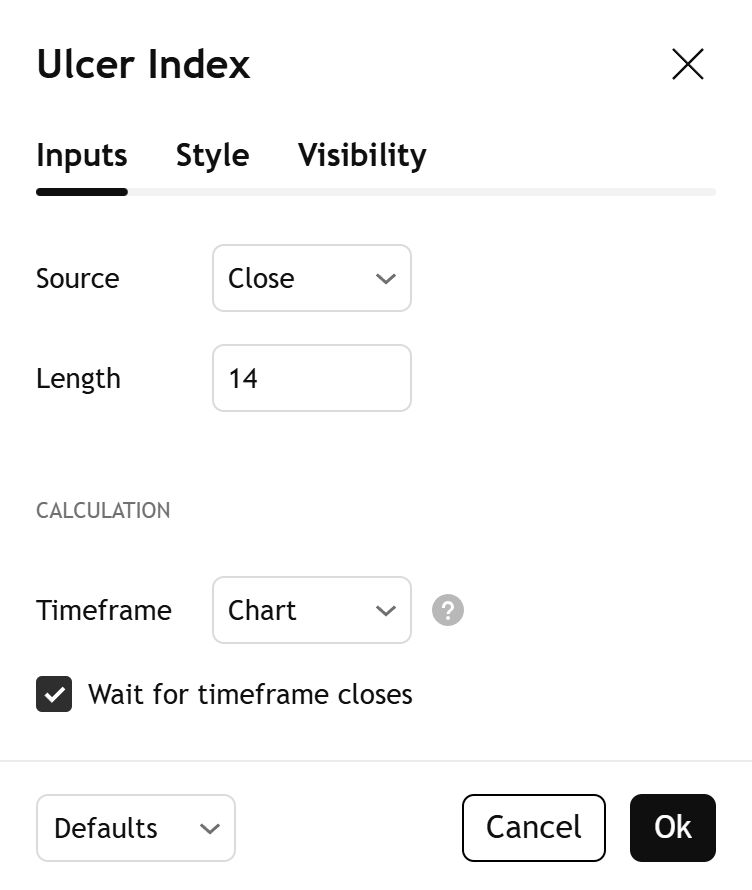
Entradas
 Fuente
La serie de valores para calcular el índice de úlcera.
Longitud
El número de barras en el periodo de retrospectiva.
Intervalo de tiempo
Establece el intervalo de tiempo que utiliza el indicador para sus cálculos. La casilla «Esperar al cierre del intervalo de tiempo» situada debajo determina si el indicador muestra los resultados solo cuando se cierra una barra en el intervalo de tiempo especificado. Consulte el artículo Aprovechar el análisis de múltiples intervalos de tiempo para obtener más información.